Cache Valley's First Temple
For well over a century, Cache Valley had exactly one temple: the Logan Utah Temple. Dedicated in 1884, it's one of the earliest temples built by the Church, predating the Salt Lake Temple itself by eight years. Its castellated, pioneer-era architecture has anchored Logan's skyline for generations, and for decades it served as the sole temple for every Latter-day Saint family in Cache Valley and the surrounding areas.
Why a Second Temple, and Why Now
The Smithfield Utah Temple was announced by Church President Russell M. Nelson as part of a wave of new temple announcements aimed at bringing temples closer to where members actually live. That's been a consistent pattern under his leadership: rather than asking members to travel further and further as the Church grows, build more temples, closer together, so ordinances become part of regular life instead of an occasional long drive.
For Cache Valley, that meant recognizing what the numbers already showed: enough Latter-day Saints live in the northern half of the valley to support a temple of their own, one a short drive away instead of a trip across town or across the valley.
Why Smithfield Specifically
Smithfield isn't a big city, and that's part of what makes this notable. A temple isn't reserved for major metro areas; it goes where the members are. Smithfield sits centrally enough in northern Cache Valley to serve nearby communities like Richmond, Lewiston, Hyde Park, and North Logan, while still being small enough that most residents can point to exactly which field or hillside the temple now sits on.
For a town this size, having a temple changes its identity a little. It becomes a landmark, a meeting point, a reason out-of-towners might type "Smithfield, Utah" into a map for the first time. Locals here don't take that lightly.
A Surprising Location Choice
When the temple was first announced in General Conference, there was a plot of land up on the hillside that had been reserved for a stake center. We were sure the Church would use that spot for the new temple instead, putting it up where it would be visible from the whole valley, much like the Bountiful Utah Temple. So it caught us off guard when the announcement came that the temple would be built down in the valley instead.
Looking back, though, the valley location makes a lot more sense. It's far more accessible to the surrounding area, and easier access for more members is one of the main reasons so many new temples are being built in the first place.
A Personal Connection
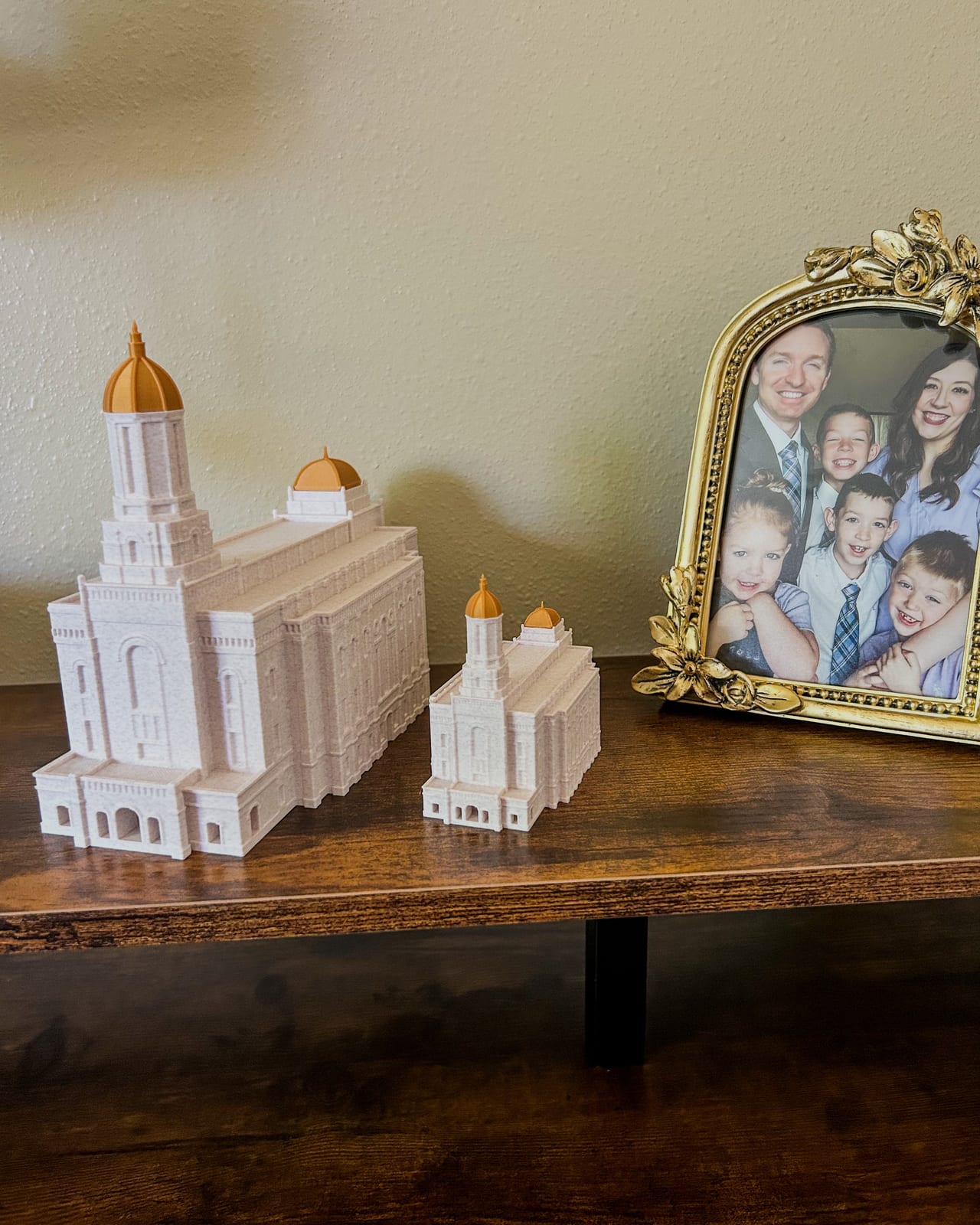
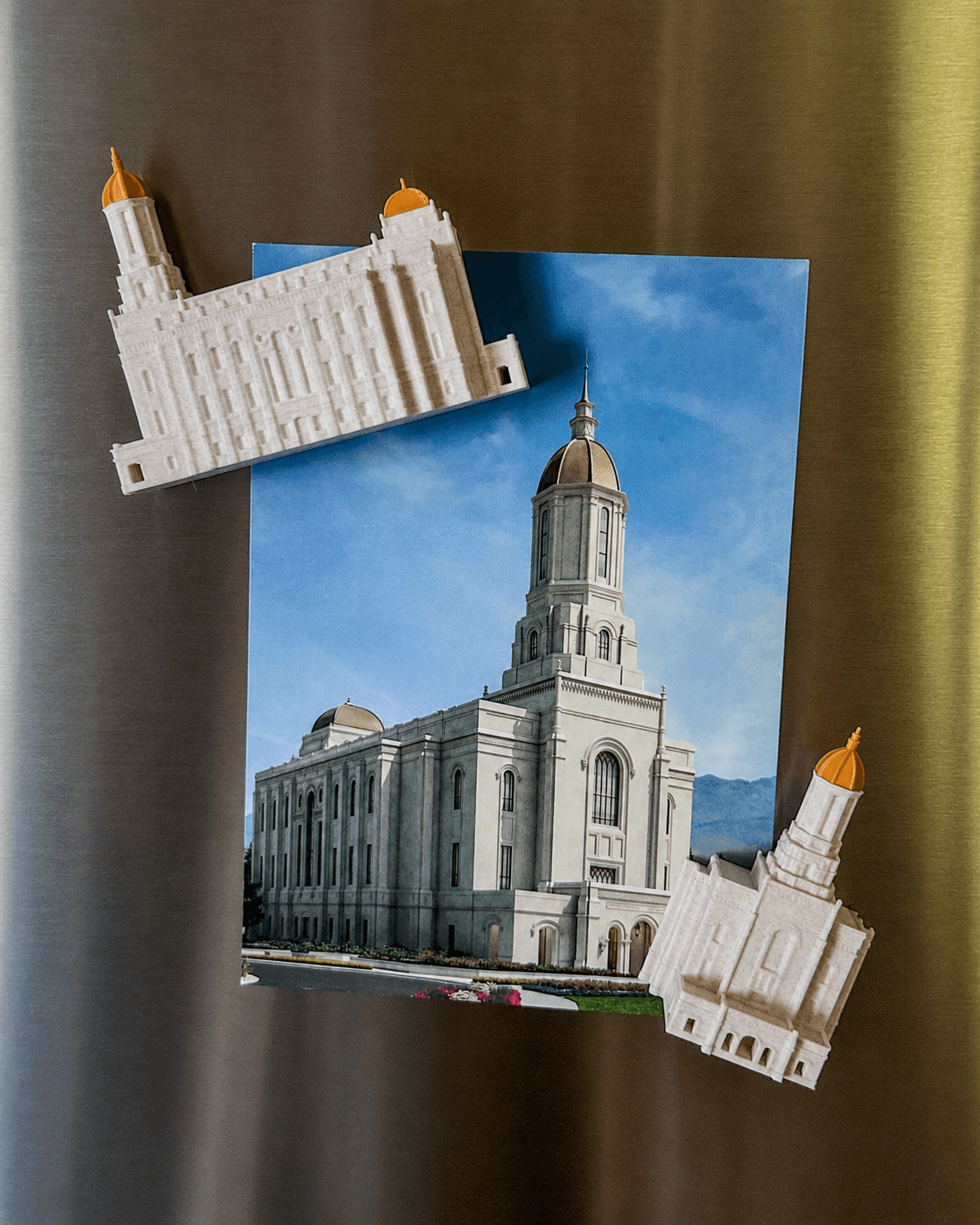
We're not writing about this from a distance. Hoffmakers is based right here in Smithfield, where every one of our products is designed, printed, and packed. Watching a temple rise in the same small town where our workshop sits is part of why we made a 3D-printed statue and fridge magnet of it in the first place. It's not just a building down the road for us; it's a landmark we get to watch being built from our own backyard.
Watch the Statue Come Together
Modeling a building this detailed in CAD takes a lot of passes, from blocking out the basic proportions to sculpting the arched windows, pilasters, and the dome. Here's a timelapse of that process, from a rough shape to the finished 3D model we print from.
What a Second Temple Means for a Community
Beyond convenience, a local temple changes how ordinances fit into daily life. Baptisms for the dead, sealings, and regular temple worship stop being something families plan a special trip around and start being something they can do on an ordinary weeknight. Youth can participate more easily. Missionary farewells and homecomings, weddings, and anniversaries all take on a new local backdrop.
It also reflects something larger: steady, sustained growth of the Church in a place that's had Latter-day Saint roots since the earliest days of Utah settlement. A second temple in Cache Valley isn't just an administrative milestone; it's a marker of how much this valley has grown since the Logan Temple stood alone.
A Keepsake for a Local Milestone
Whether you have ties to Smithfield, Cache Valley, or just want a memento of a temple built during your lifetime, a small model is a meaningful way to hold onto that. Our Smithfield Utah Temple statue and fridge magnet are designed to capture the building's architectural detail, from the arched windows to the gold-painted dome, at a scale that fits a shelf, entryway table, or the front of a fridge.
Smithfield Utah Temple Keepsakes
3D-printed statues and magnets, made right here in Smithfield